Children's care home finance
We arrange commercial finance for operators, buyers and investors opening, acquiring or refinancing children's residential homes. This is business funding against a trading home regulated by Ofsted, not the CQC.

Funding children's homes
Children's residential care is a distinct setting with its own regulator. In England, children's homes are registered with and rated by Ofsted, not the CQC, and the registered-manager and quality requirements are specific to children's social care. Lenders that fund the sector understand this difference.
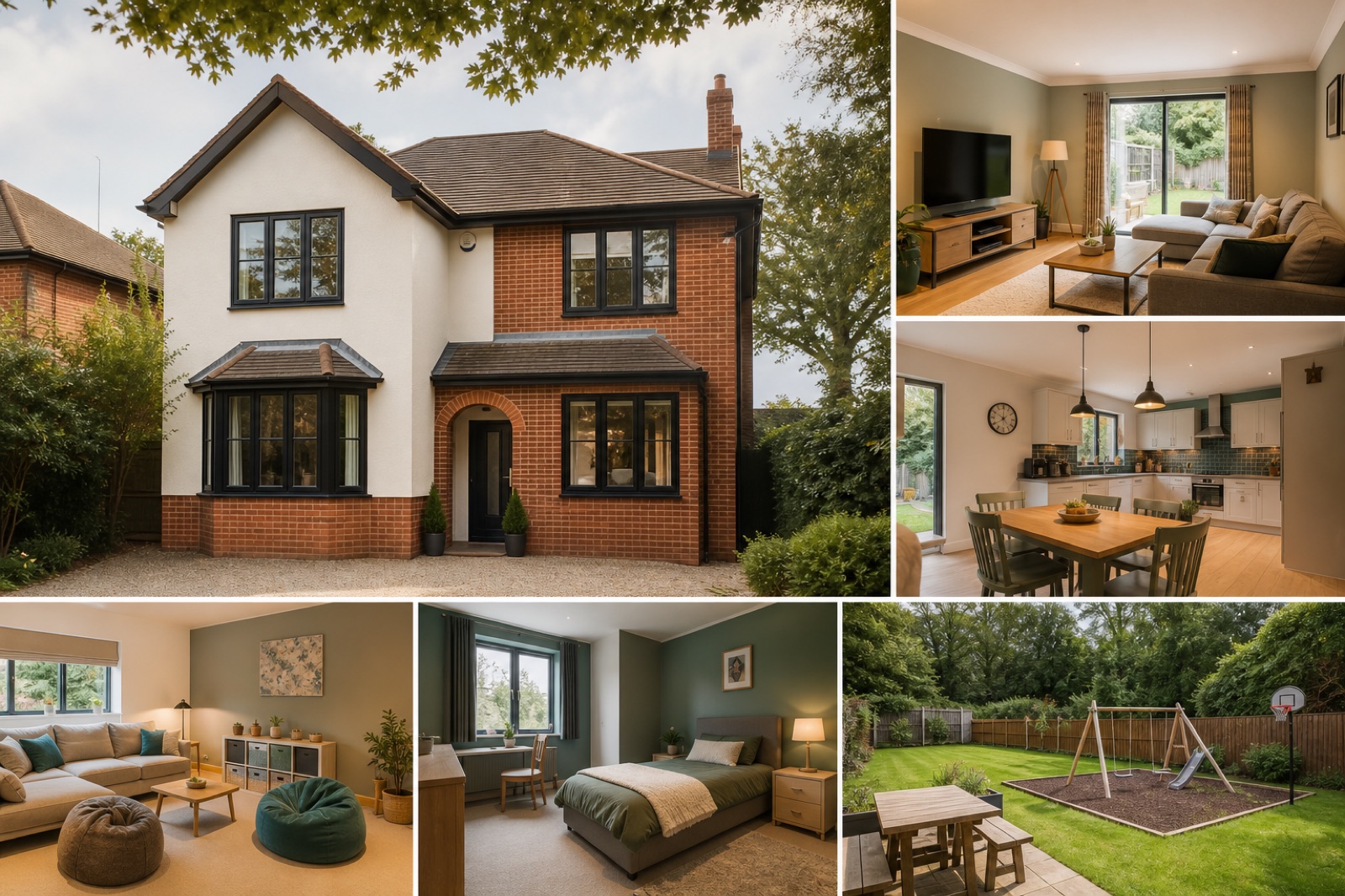
Children's care home finance, as we use it, is the commercial mortgage, going-concern or development loan used to open, buy or refinance a children's home as a trading business. Lot sizes are typically small, often a single domestic-scale property running a handful of placements, but fee-per-child is high and income is overwhelmingly local-authority commissioned.
Lenders read children's homes through the operator's track record, the Ofsted rating, the durability of local-authority placements and the suitability of the property. Because placements are commissioned and fee-per-child is substantial, a well-run home with a Good or Outstanding Ofsted rating can carry strong earnings on a modest property.
We present the Ofsted position, the commissioning relationships and the trading so children's-sector lenders can underwrite it, and we run the market for the keenest terms.
What we fund
- Single-occupancy children's homes
- Small-group children's residential homes
- Homes for children with emotional and behavioural needs
- Solo placements for complex or high-acuity children
- Therapeutic residential childcare settings
- New children's homes registering with Ofsted
Indicative terms
- Commercial mortgage LTVUp to 70 to 75% of value
- Going-concern basisTo around 70% of going-concern value
- Term15 to 25 years
- Indicative rateFrom around 7.5 to 9%
- RegulatorOfsted, not the CQC
- Key testsOperator track record, Ofsted rating, commissioned placements, property fit
- IncomeLargely local-authority commissioned, high fee per child
Indicative only. Terms vary by lender, operator and home and are not an offer of finance.
How we fund children's residential care
We fund children's homes on trading earnings and the durability of commissioned placements, recognising that the regulator is Ofsted rather than the CQC. For an acquisition or refinance we build maintainable earnings, examine the local-authority placement record and the operator's track record, and arrange a commercial mortgage to around 70 to 75% of value over 15 to 25 years, or a going-concern facility to roughly 70% of going-concern value. Because a children's home is often a single domestic-scale property running high-fee placements, lending is sized on trading as much as the bricks and mortar. For new homes we can fund acquisition and fit-out ahead of Ofsted registration, and development finance to about 60 to 70% of loan-to-cost where a scheme is built or converted. Every figure is indicative, never an offer.
Lender appetite for children's homes
Children's residential care is a specialist niche, but appetite is genuine for experienced operators. Shawbrook and OakNorth fund children's-home operators and small portfolios through their healthcare and specialist teams, valuing the high fee-per-child and commissioned income. Assetz Capital and Allica Bank support owner-operator acquisitions and start-ups with a credible registered manager and Ofsted plan, while Atom Bank and Paragon lend on stabilised, well-rated homes. Puma Property Finance and Ortus feature on conversion and fit-out. As a broker without an exclusive tie, we match the operator's Ofsted track record and commissioning to the lenders that understand children's social care, not those that only know adult care.
The children's residential care market
Children's residential care sits entirely outside the elderly-care fee tables and is Ofsted-regulated, so we do not apply care home £/bed or occupancy figures to it. The relevant context from our market dataset is the broad strength of healthcare and social-care investment: Knight Frank records £3.2bn of healthcare investment in FY2024 against a five-year average of £2.4bn, with sector total returns of 5.8%, and Skills for Care reports a social-care workforce vacancy rate of 7.0% for 2024/25, down from a 10.5% peak. Demand for children's placements is driven by local-authority need rather than demographics of ageing. For lenders, a children's home with durable commissioned placements and a Good or Outstanding Ofsted rating is a defensible income asset on a modest property base.
Finance that suits this setting
- Care home purchase and investment financeAcquires a trading children's home or adds to a small children's-home portfolio.
- Going-concern and operator financeLends on trading where an experienced operator takes on a registered children's home.
- Owner-occupier care home mortgageSuits hands-on operators opening or running a single children's home themselves.
- Care home bridging financeFunds purchase and fit-out of a property ahead of Ofsted registration, then terms out.
Fund a children's homes home
A view on fundability within one working day.
What drives a children's home's numbers
Children's residential care runs on very few placements at high fee-per-child, almost entirely local-authority commissioned, and is regulated by Ofsted rather than the CQC. The economics are therefore about placement durability and the Ofsted rating, not care home occupancy or £/bed, which do not apply here. A single domestic-scale property can carry strong trading earnings because the fee-per-child is substantial, so lenders size lending on the trading performance as much as the property value. The decisive factors are the operator's track record, the registered manager, the spread of local-authority commissioning relationships and a Good or Outstanding Ofsted rating that sustains placements. We model maintainable earnings and weigh how dependable the commissioned placements are.
Indicative children's home leverage and rates
Indicatively we arrange children's-home commercial mortgages to around 70 to 75% of value, or going-concern lending to roughly 70% of going-concern value, over 15 to 25 years, with pricing from around 7.5 to 9%. A strong operator track record, durable placements and a Good or Outstanding Ofsted rating earn the keener end. For new homes we can fund purchase and fit-out, often via bridging, ahead of Ofsted registration, terming out once the home is rated and placements begin. These are market-typical, indicative figures and never an offer; because the regulator is Ofsted and the income is commissioned, the terms depend on the operator, the registration plan and the placement record.
Frequently asked questions
How much money do I need to open a children's home?
As a working assumption, lenders advance to around 70 to 75% of property value, so plan for a 25 to 30% property deposit plus working capital for fit-out, staffing and the pre-registration period before placements and income begin. We size each case around the property, the operator's track record and the Ofsted registration plan, and present the figures as indicative.
Are children's homes regulated by Ofsted or the CQC?
In England, children's homes are registered with and rated by Ofsted, not the CQC. This is a key distinction lenders understand, because the registered-manager requirements, inspection regime and quality standards are specific to children's social care. We present the Ofsted position clearly in every case.
Can I get finance to open a brand-new children's home?
Yes. We can fund the purchase and fit-out of a property ahead of Ofsted registration, often using bridging while the home is prepared and registered, with the exit onto a term commercial mortgage once the home is rated and placements begin. The operator's track record and registered manager are central to lender appetite.
How do lenders view local-authority placement income?
Favourably where it is durable. Children's-home income is overwhelmingly local-authority commissioned at high fee-per-child, so lenders assess the spread of commissioning relationships and the home's occupancy track record. A stable placement record and a strong Ofsted rating support keener terms.
Why is fee-per-child so important to a children's home loan?
Because children's homes run very few placements, the high fee-per-child is what carries the trading earnings on what is often a modest domestic property. Lenders therefore size lending on the trading performance as much as the property value, which is why the operator and Ofsted rating matter so much.
Funding a children's homes home?
Tell us about the home and the operator and we will come back with a view on fundability and likely terms.