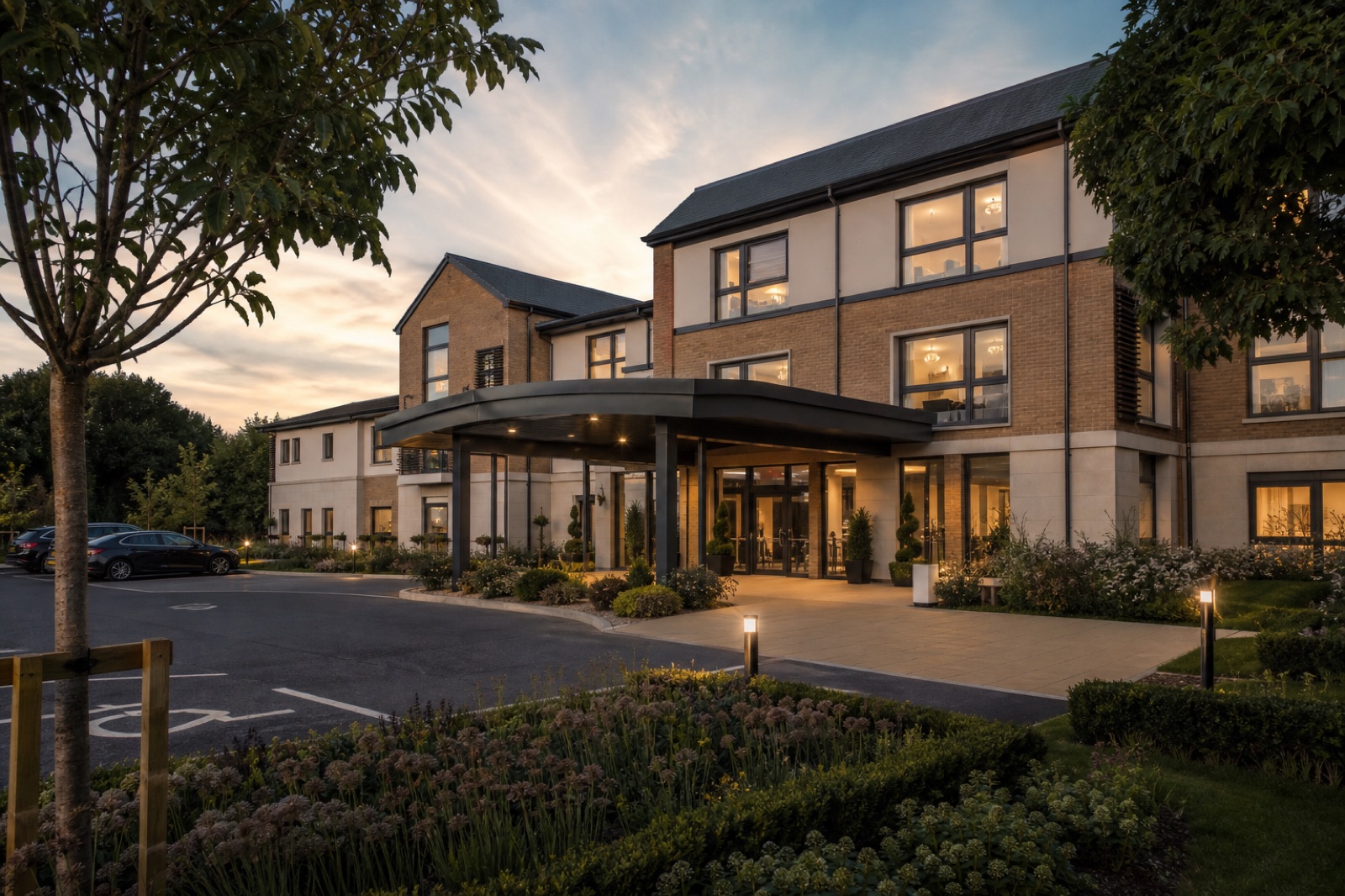
Care home mortgages and purchase finance
The commercial mortgage that funds the purchase of a trading care home, or an investment home let to an operator. We arrange and place the debt with the lenders that understand the sector.

What care home purchase finance is
Care home purchase finance is a commercial mortgage used to buy a care home as a trading business, or to buy a care home as an investment let to an operator on a lease. It is the long-term term loan that sits behind the acquisition, secured by a first charge over the property and supported by the trading performance of the home. This is finance to buy a care home as a business, not help with paying care fees.
Lenders look at the home as an operating asset, not just bricks and mortar. They test the operator covenant, the CQC rating, occupancy and the fee mix between private and local-authority residents, then size the loan against the trading profit the home generates. The valuation is usually carried out on a going-concern basis, reflecting the home as a functioning business rather than vacant property.
We place these mortgages with specialist healthcare lenders such as Shawbrook, OakNorth, Allica Bank and Paragon, alongside the wider commercial mortgage market. Whether you are an experienced operator adding a home to a portfolio, a first-time buyer with a manager in place, or an investor buying a let home, we match the deal to the lender most likely to support it.
Investment purchases, where you buy the freehold and let it to an operator, are assessed on the lease, the rent cover and the strength of the tenant rather than on running the home yourself. Owner-operator purchases are assessed on the trading accounts of the business you intend to run.
- Commercial mortgage to buy a trading care home or an investment let
- Sized on EBITDARM trading profit, not just property value
- Going-concern valuation reflecting the home as a business
- Operator covenant, CQC rating, occupancy and fee mix all tested
- Open to experienced operators, first-time buyers with management, and investors
- Placed with Shawbrook, OakNorth, Allica Bank, Paragon and the wider market
Indicative terms
- Loan sizeFrom around 250,000 pounds, no fixed ceiling on strong covenants
- Loan to valueUp to 70 to 75 percent, occasionally higher on a strong covenant
- Term15 to 25 years
- RateIndicatively from around 7 to 9 percent, or a margin over base or SONIA
- RepaymentCapital and interest, or interest-only on the right profile
- Interest coverTested on EBITDARM trading profit
- Key testsOperator covenant, CQC rating, occupancy, fee mix
- SecurityFirst legal charge over the home, debenture on the operating company
Indicative only. Terms vary by lender, scheme and borrower and are not an offer of finance.
Who it suits
- Experienced operators buying a single home or adding to a portfolio
- First-time buyers entering the sector with an experienced manager in place
- Care groups acquiring trading homes to expand a region
- Investors buying a freehold to let to an operator on a commercial lease
- Buyers of a home from administration or a distressed sale with a turnaround plan
Discuss care home purchase and investment finance
A view on fundability within one working day.
How we arrange your purchase finance
Review and terms
We review the home, the trading accounts, the CQC report and your experience, then approach the lenders whose criteria fit and agree indicative heads of terms.
Decision in principle
We secure a decision in principle setting the loan, the rate and the conditions, so you can bid or exchange with confidence.
Valuation and due diligence
The lender instructs a going-concern valuation and works through legal and regulatory due diligence, including the CQC position and the operating company.
Offer and completion
The formal offer is issued, the legal work completes and funds are drawn to complete the purchase.
Who can borrow and what lenders look for
Lenders lend to operators and investors buying a care home as a business. They expect a credible operator covenant, which for a first-time buyer usually means an experienced registered manager and a clear business plan, and for an established group means a track record across existing homes. The CQC rating matters: a Good or Outstanding home is straightforward, while a Requires Improvement or Inadequate rating is lendable but needs a clear remediation plan and tends to mean a lower loan to value. Lenders examine occupancy, the split between private and local-authority fees, staff costs and agency reliance, and the local market. For an investment purchase let to an operator, the focus shifts to the strength of the lease, the rent cover and the tenant covenant. We package the case to put your strengths in front of the right lender and to explain any weaknesses before they become a problem.
How much you can borrow
On a purchase, most lenders advance up to 70 to 75 percent of the going-concern value, and occasionally more where the operator covenant is strong and the home trades well. The binding constraint is usually interest cover rather than loan to value: lenders size the loan so that EBITDARM, the trading profit before rent, interest, tax, depreciation, amortisation and management charges, covers the debt service with headroom, often around 1.4 to 1.5 times. A home with high, stable occupancy and a strong private-fee mix supports more debt than a home with the same property value but weaker trading. Margins across the sector are healthy: Knight Frank reported an average EBITDARM margin of 30.1 percent of income in FY2024/25, with nursing homes at 31.1 percent. We model the achievable loan from the accounts before we approach lenders, so the figure we quote is grounded in the home's actual trading.
Rates and costs
Care home commercial mortgage rates are indicatively from around 7 to 9 percent, quoted either as a fixed rate or as a margin over the Bank of England base rate or SONIA, with the exact rate set by the operator covenant, the CQC rating, the loan to value and the term. Expect a lender arrangement fee, usually around 1 to 2 percent of the loan, a valuation fee for the going-concern report, and legal costs for both sides. A monitoring or trading review may apply on larger or weaker covenants. Our broker fee is disclosed in writing up front and we never claim an exclusive tie to any lender. We compare the total cost of the deal across the market, because the lowest headline rate is not always the cheapest facility once fees and terms are counted.
Purchase finance, bridging or development finance
Purchase finance is the right product when you are buying a trading home that you intend to hold and run, or let, for the long term. If you need to move faster than a term lender can, for an auction or a competitive purchase, or the home is not yet trading or CQC-registered, care home bridging finance is the better fit and is later refinanced onto a term mortgage once the home stabilises. If you are building a new home or carrying out a major extension or conversion, development finance funds the build to a stabilised exit. Many operators use these products in sequence: bridge to buy, develop or reposition, then refinance onto a long-term commercial mortgage. We map the route across all three so you are not paying short-term money for longer than you need to.
Care home purchase and investment finance: common questions
How much deposit do I need to buy a care home?
Most lenders advance up to 70 to 75 percent of the going-concern value, so plan for a deposit of around 25 to 30 percent of the price, plus fees. A strong operator covenant and a well-trading home can stretch the loan to value further, while a weaker CQC rating or thin trading will mean a larger deposit.
Can a first-time buyer get a care home mortgage?
Yes. Lenders will support a first-time buyer who has an experienced registered manager in place and a credible business plan. The loan to value may be a little lower than for an established operator, and the trading projections are scrutinised more closely, but the deal is very much fundable.
What CQC rating do I need to finance a care home?
A Good or Outstanding rating is the most straightforward. Lenders will still finance a home rated Requires Improvement, and sometimes Inadequate, but they will want a clear remediation plan and will typically reduce the loan to value to reflect the risk.
What is the difference between buying to operate and buying as an investment?
If you buy to operate, lenders assess your business, your trading accounts and your management. If you buy as an investment and let the home to an operator, they assess the lease, the rent cover and the strength of the tenant. The two are underwritten quite differently, so it pays to know which route you are taking before you approach a lender.
How long does care home purchase finance take to arrange?
A term commercial mortgage typically takes around eight to twelve weeks from application to completion, driven mostly by the going-concern valuation and legal due diligence. If you need to move faster, we can arrange bridging finance to complete quickly and refinance onto the term mortgage afterwards.
Discuss care home purchase and investment finance
Send us your scheme and we will come back with a view on fundability and likely terms within one working day.