Extra care housing finance
We arrange commercial finance for developers, operators and investors building or holding retirement villages and extra care housing. This is property and business funding, not help with an individual's housing costs.

Funding retirement and extra care
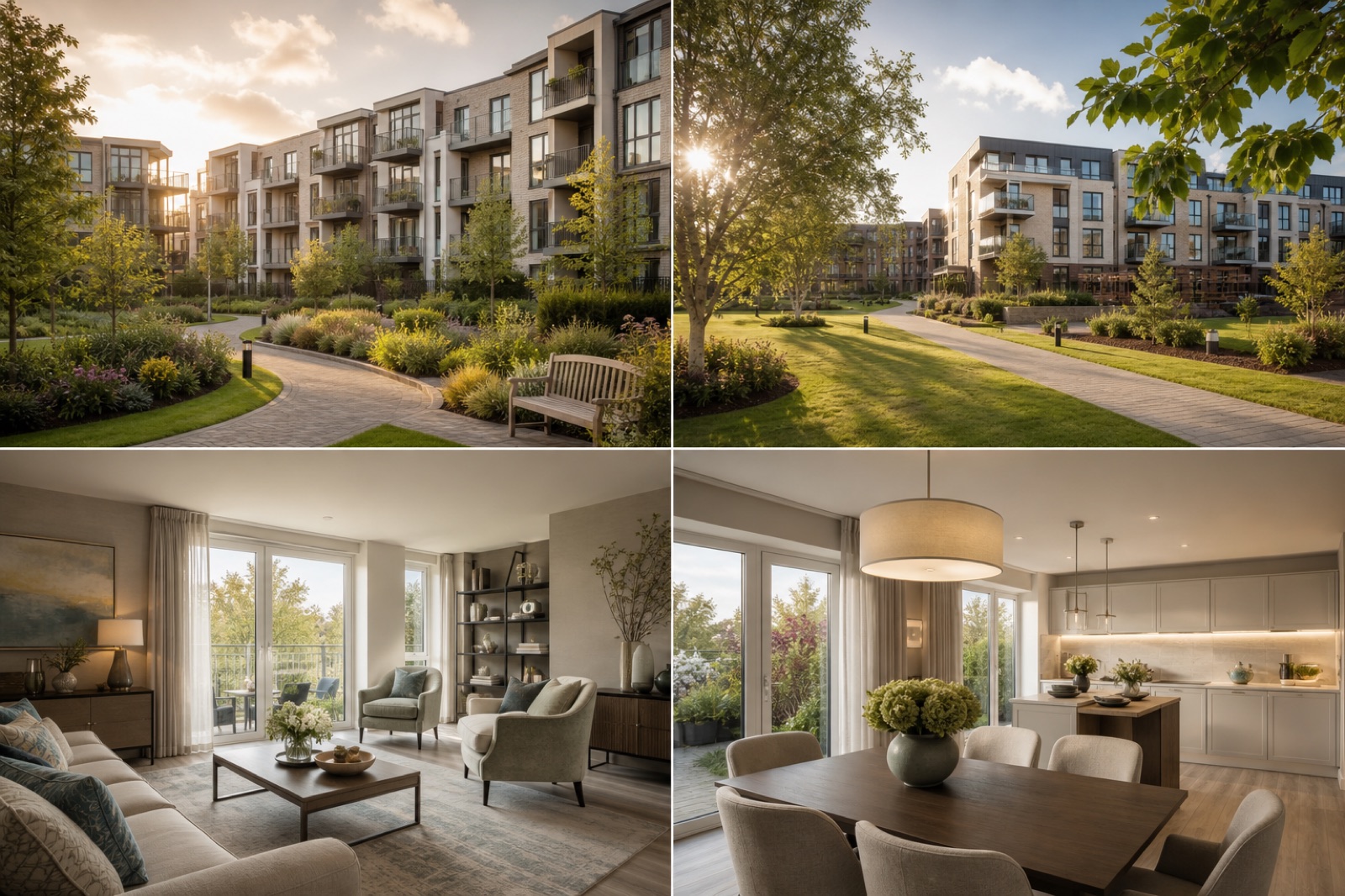
Retirement villages and extra care housing sit between mainstream housing and registered care. Residents live independently in their own homes, with care and support available on site as needs change. Schemes can be for sale, for rent or mixed tenure, which shapes how each is financed.
Extra care housing finance, as we use it, is the development facility, investment loan or commercial mortgage used to build, hold or refinance a retirement village or extra care scheme as a property and operating business. Because these schemes are capital-intensive and revenue arrives over a sales or letting period, the funding structure matters as much as the headline leverage.
Lenders read these schemes through the development cost, the sales or rental income profile, the operator covenant where care is provided, and the strength of the catchment. A for-sale village turns on absorption and sales values; a for-rent or extra care scheme turns on stabilised income and operator covenant.
We structure the funding to match the tenure and revenue profile, and we run the market across development lenders, investment funders and, where needed, mezzanine and equity.
What we fund
- For-sale retirement villages
- For-rent extra care housing schemes
- Mixed-tenure later-living developments
- Extra care apartments with on-site care
- Assisted living and independent living schemes
- Forward-funded institutional later-living schemes
Indicative terms
- DevelopmentUp to 60 to 70% loan-to-cost
- Stabilised investment loanUp to around 60 to 65% of stabilised value
- Commercial mortgage LTVUp to 70 to 75% on let, trading stock
- Term15 to 25 years on investment debt
- Indicative rateDevelopment around 9 to 12%; term from around 7 to 9%
- Key testsCost, sales or letting profile, operator covenant, catchment
- RevenueUnit sales, rents and care or service income
Indicative only. Terms vary by lender, operator and home and are not an offer of finance.
How we fund retirement villages and extra care
We fund these schemes around their tenure and revenue profile. For a development we arrange senior debt to around 60 to 70% of loan-to-cost, or up to roughly 60 to 65% of stabilised value, with pricing indicatively around 9 to 12% reflecting the build and absorption risk. For-sale villages are sized on sales values and absorption; for-rent and extra care schemes are sized on stabilised rental and care income and the operator covenant. Once a scheme is built and let or sold down, we refinance onto a term commercial mortgage to around 70 to 75% on the trading or let element from around 7 to 9%. Where senior debt stops short of the capital need, we layer in mezzanine or equity. Every figure is indicative and not an offer.
Lender appetite for retirement villages and extra care
Later living draws appetite from development and investment lenders who understand long absorption and care-linked income. Puma Property Finance and OakNorth fund extra care and retirement-village development, while Shawbrook and Assetz Capital support smaller schemes and the investment-stage debt. Ortus appears on development and shorter-dated phases, and Allica Bank, Paragon and Atom Bank lend on stabilised, let or trading later-living stock. As a broker with no exclusive tie, we match the scheme's tenure and risk profile to the lenders most comfortable with later living, and arrange mezzanine or equity alongside senior debt where the capital stack needs it.
The retirement villages and extra care market
The later-living investment case is strong and institutional. Knight Frank records UK healthcare investment of £3.2bn in FY2024 against a five-year average of £2.4bn, with overseas capital at 52.5% of investment demand and sector total returns of 5.8%. Prime seniors-housing yields in the South East stood at around 5.25% in Q3 2025 per Knight Frank, evidence of keen institutional pricing for the best later-living stock. The ONS projects the over-85 population to nearly double from 1.7m to 3.3m between 2022 and 2047, and Carterwood flags a projected shortfall of 221,600 to 228,600 en-suite wetroom beds by December 2024 estimates, much of which is the modern later-living and extra care product the market lacks. For lenders, a well-located scheme has a clear sales or investment exit.
Finance that suits this setting
- Care home development financeThe primary route for building retirement villages and extra care schemes.
- Mezzanine and equityTops up the capital stack on large, capital-intensive later-living schemes.
- Care home purchase and investment financeAcquires or holds a let, stabilised extra care scheme as an investment.
- Care home refinanceTerms out development debt onto investment finance once a scheme is built and let.
Fund a retirement and extra care home
A view on fundability within one working day.
What drives a retirement village or extra care scheme's numbers
Later living is capital-intensive with revenue arriving over a sales or letting period, so the economics turn on cost, absorption and the revenue model. A for-sale village is driven by sales values and how quickly units sell; a for-rent or extra care scheme is driven by stabilised rents, care or service income and the operator covenant. The investment backdrop is strong and institutional: Knight Frank records UK healthcare investment of £3.2bn in FY2024 against a five-year average of £2.4bn, overseas capital at 52.5% of demand, and prime seniors-housing yields in the South East around 5.25% in Q3 2025. The ONS projects the over-85 population to nearly double to 2047. We model the build cost, the absorption or letting profile and the stabilised income that supports the term exit.
Indicative retirement village and extra care leverage and rates
Indicatively we arrange senior development debt to around 60 to 70% of loan-to-cost, or up to roughly 60 to 65% of stabilised value, with pricing around 9 to 12% reflecting build and absorption risk, and mezzanine or equity where the stack needs it. For-sale villages are sized on sales values, for-rent and extra care on stabilised income and operator covenant. Once built and let or sold down, we refinance onto a term commercial mortgage to around 70 to 75% on the trading or let element from around 7 to 9%. These are market-typical, indicative figures and never an offer; the terms depend on the scheme, the tenure and deliverability, and we run development, investment and equity markets together.
Frequently asked questions
How do you qualify for extra care housing finance as a developer?
Lenders look for a credible scheme, a deliverable build and a clear revenue profile, whether that is unit sales, rents or care income. They weigh the cost, the absorption or letting assumptions, the operator covenant where care is provided and the strength of the catchment. We package these so development funders can size the senior debt and, where needed, mezzanine.
What loan-to-cost can I raise for a retirement village?
Indicatively up to 60 to 70% of loan-to-cost on senior development debt, or around 60 to 65% of stabilised value. Where the equity gap is larger than that allows, we can arrange mezzanine or equity to complete the stack. The exact leverage depends on the scheme, the tenure and the deliverability.
How is a for-sale village financed differently from a for-rent scheme?
A for-sale village is sized on sales values and absorption, with the debt repaid as units sell. A for-rent or extra care scheme is sized on stabilised rental and care income and the operator covenant, then typically refinanced onto longer-term investment debt once let. We structure each to its tenure.
Is extra care housing the same as a care home for finance purposes?
No. Residents in extra care live independently in their own homes with care available on site, so the asset behaves more like later-living property than a registered care home. That changes the funding structure, the lenders and the revenue model, which is why we treat it separately.
Can finance fund both the build and the long-term hold?
Yes. We arrange development finance for the build, then refinance onto a term commercial mortgage or investment loan once the scheme is built and let or sold down, giving a clean route from construction through to stabilised hold or sale.
Funding a retirement and extra care home?
Tell us about the home and the operator and we will come back with a view on fundability and likely terms.