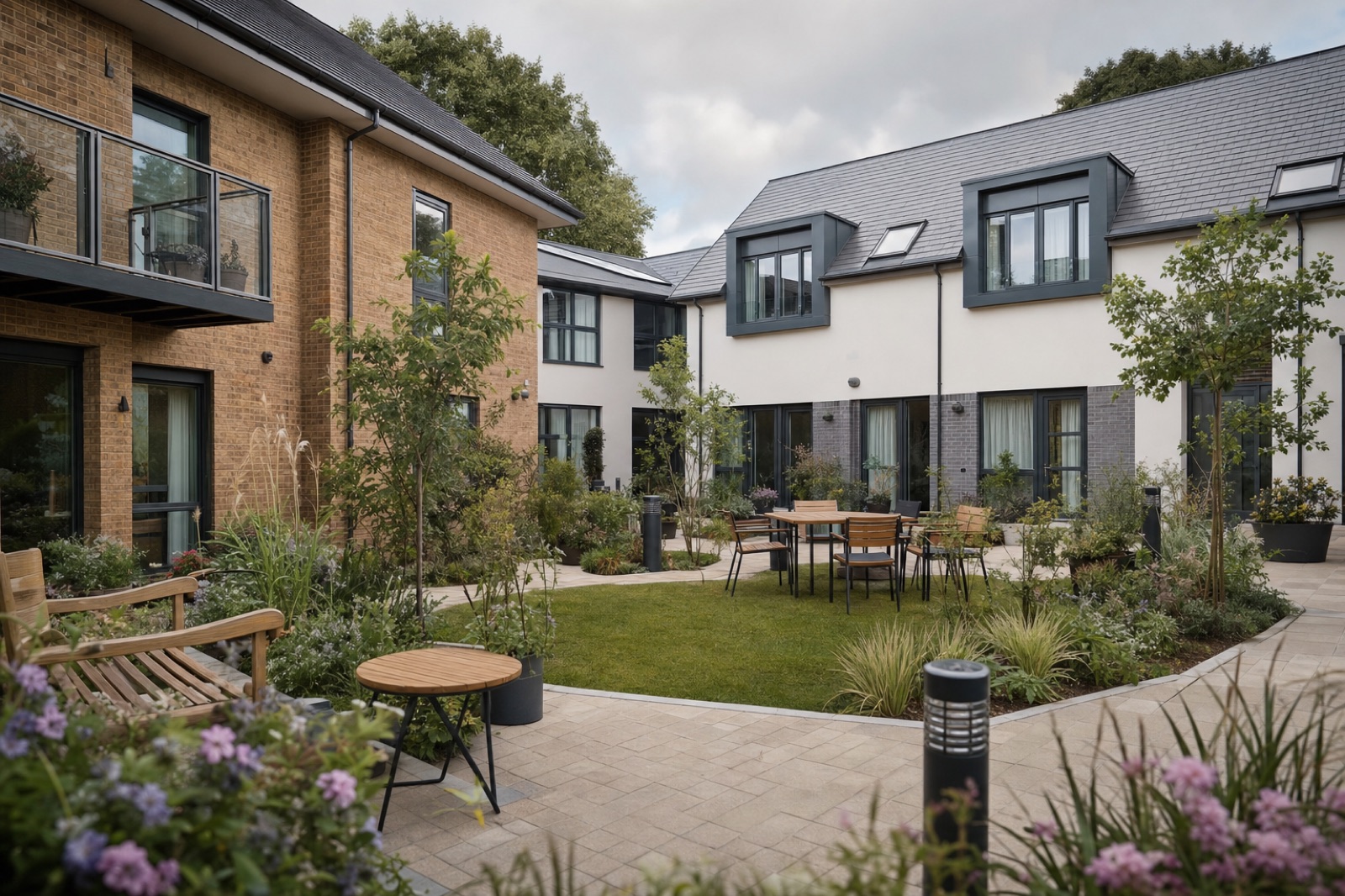
Supported living finance
We arrange commercial finance for operators, investors and developers in supported living and specialised supported housing. This is business and property funding, not help with an individual's housing costs.

Funding supported living
Supported living differs from a registered care home. Residents hold their own tenancy and receive care and support separately, often in shared houses or self-contained flats. The property and the care are unbundled, which changes how the asset is financed compared with a care home.
Supported living finance, as we use it, is the commercial mortgage, lease-backed loan or development facility used to acquire, build or refinance supported living and specialised supported housing as a property and operating business. Income often flows through a registered provider or housing association lease and is underpinned by housing benefit and care commissioning.
Because the property is frequently let on a long lease to a care provider or housing association, lenders can underwrite against lease income and covenant rather than purely a trading care home. That said, the strength of the lease, the provider behind it and the suitability of the property all drive the terms.
We present the lease structure, the provider covenant and the property so lenders can price it, and we run the market across banks and specialist funders.
What we fund
- Specialised supported housing for adults with care needs
- Shared supported living houses of multiple occupancy
- Self-contained supported living apartments
- Provider-leased schemes with registered-provider income
- Forward-funded new supported living developments
- Converted residential property repurposed for supported living
Indicative terms
- Commercial mortgage LTVUp to 70 to 75% of value
- Lease-backed basisSized on lease income and provider covenant
- Term15 to 25 years
- Indicative rateFrom around 7 to 9%
- DevelopmentUp to 60 to 70% loan-to-cost
- Key testsLease strength, provider covenant, property suitability, tenancy income
- IncomeTenancy, housing benefit and commissioned care
Indicative only. Terms vary by lender, operator and home and are not an offer of finance.
How we fund supported living
We fund supported living against the property and its income, which is structured differently from a care home. Where a scheme is let on a long lease to a registered provider or housing association, we arrange lending sized on the lease income and the provider covenant, on a commercial mortgage to around 70 to 75% of value over 15 to 25 years. Where an operator runs the support directly, we look at the trading and tenancy income. For new schemes we arrange development or forward-funding to about 60 to 70% of loan-to-cost. The key questions are the strength and length of the lease, the covenant of the provider behind it, and whether the property genuinely suits supported living. Every figure is indicative and not an offer.
Lender appetite for supported living
Supported living draws appetite from lenders comfortable with lease-backed and social-housing-adjacent income. Shawbrook and Allica Bank lend on supported living and specialised supported housing where the lease and provider covenant are sound. OakNorth and Assetz Capital support operator and development cases, while Puma Property Finance and Ortus appear on new schemes and forward funding. Paragon and Atom Bank are more selective and lean toward stabilised, well-let stock. As a broker with no exclusive tie, we match the lease structure and provider covenant to the lenders most at home with supported living, which is a distinct discipline from mainstream care home lending.
The supported living market
Supported living sits within the wider social-care demand picture rather than the elderly-care fee tables, so we are careful not to misapply care home figures. The structural drivers are real: the ONS projects the over-85 population to nearly double from 1.7m to 3.3m between 2022 and 2047, and adult social-care demand more broadly continues to rise. Skills for Care reports a social-care workforce vacancy rate of 7.0% for 2024/25, around 111,000 vacancies, down from a 10.5% peak, which eases delivery pressure on operators. For lenders, a well-let supported living scheme with a creditworthy provider and a long lease is closer to a long-income property asset than a trading care home, which is part of its appeal as both an income holding and an exit.
Finance that suits this setting
- Care home purchase and investment financeAcquires a let supported living scheme as a long-income property and operating asset.
- Sale-and-leaseback and OpCo PropCoSeparates property from operation, which mirrors the unbundled supported living model.
- Care home development financeFunds new supported living and specialised supported housing schemes.
- Care home refinanceRe-prices debt or releases equity from a stabilised, well-let supported living scheme.
Fund a supported living home
A view on fundability within one working day.
What drives a supported living scheme's numbers
Supported living behaves more like long-income property than a trading care home, so the economics centre on the lease and the covenant behind it. Where a scheme is let to a registered provider or housing association, the income runs through tenancy, housing benefit and commissioned care, and the value to a lender is the strength and length of that lease and the provider's creditworthiness. Where an operator runs the support directly, occupancy and the tenancy income drive the numbers. The wider demand backdrop is supportive: the ONS projects the over-85 population to nearly double from 1.7m to 3.3m between 2022 and 2047, and Skills for Care reports a social-care vacancy rate of 7.0% for 2024/25, down from a 10.5% peak, easing delivery pressure. We model income on the lease and covenant first.
Indicative supported living leverage and rates
Indicatively we arrange supported living commercial mortgages to around 70 to 75% of value, sized on the lease income and provider covenant where the scheme is let, or on trading and tenancy income where the operator runs the support directly, over 15 to 25 years from around 7 to 9%. A long lease to a creditworthy registered provider earns the keener end. Development and forward-funding for new schemes run to about 60 to 70% of loan-to-cost. These are market-typical, indicative figures and never an offer; because supported living is a distinct discipline from care home lending, the terms depend on the lease, the provider covenant and the property, and we run the market accordingly.
Frequently asked questions
Is supported living financed like a care home?
Not quite. Because residents hold their own tenancy and the care is unbundled from the property, lenders can often underwrite against the lease income and the provider covenant rather than a trading care home. The lease strength and the creditworthiness of the provider behind it drive the terms.
Can I get a commercial mortgage on a supported living scheme?
Yes. We arrange commercial mortgages to around 70 to 75% of value on supported living and specialised supported housing, sized on the lease and provider covenant where the scheme is let, or on trading and tenancy income where the operator runs the support directly.
Does an OpCo PropCo or sale-and-leaseback structure suit supported living?
Often, yes. The unbundled nature of supported living, where property and care are already separate, lends itself to OpCo PropCo and sale-and-leaseback structures that free capital from the property while a provider operates under a lease. We model these case by case.
What income underpins supported living finance?
Typically a mix of tenancy income, housing benefit and commissioned care, often flowing through a registered provider or housing association lease. Lenders assess how durable that income is and how strong the provider covenant is when sizing the loan.
Can finance fund a new supported living development?
Yes. We arrange development or forward-funding finance to around 60 to 70% of loan-to-cost for new supported living and specialised supported housing schemes, with the exit onto a term commercial mortgage once the scheme is let and stabilised.
Funding a supported living home?
Tell us about the home and the operator and we will come back with a view on fundability and likely terms.