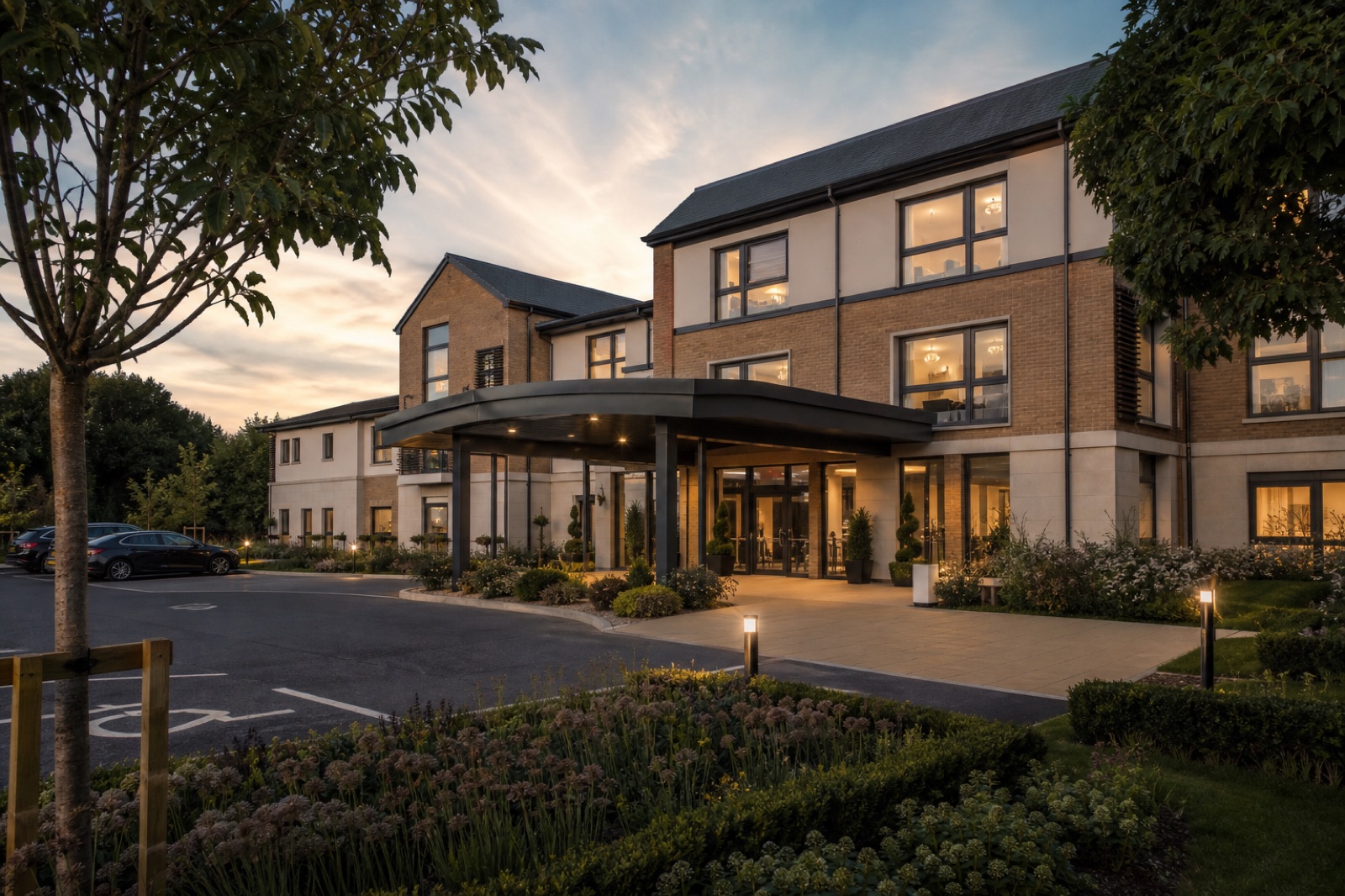
Care home development finance
The facility that funds a ground-up build, a major extension or a conversion into a registered care home, drawn in stages through construction to a stabilised exit.

What care home development finance is
Care home development finance is short-term funding that pays for the construction of a new care home, a major extension or a conversion of an existing building into a registered home. It is drawn in stages as the build progresses, secured by a first charge over the site, and repaid on a stabilised exit once the home opens and fills. This is finance to build a care home as a business, not help with paying care fees.
Unlike a term mortgage, development finance funds a site that does not yet trade. Lenders therefore underwrite the scheme: the build cost, the programme, the contractor, the planning consent and the registered, stabilised value the finished home will reach once it is full. They also look hard at the operator who will run it, because a building that cannot be filled does not repay the loan.
We place these facilities with the development lenders active in the sector, including Assetz Capital, Puma Property Finance, OakNorth and Paragon, alongside specialist healthcare funders. The senior facility usually funds the majority of the cost, with the developer contributing equity and, on a tight scheme, a mezzanine layer filling the gap.
The case for new stock is strong. LaingBuisson reports that around 44 percent of UK capacity is not purpose-built and is being replaced at only 1 to 2 percent a year, while Carterwood projects a shortfall of 57,300 to 64,300 market-standard beds by the end of 2024 and a far larger shortfall of en-suite wetroom beds. Well-located new homes meet real demand.
- Funds ground-up build, major extension or conversion to a registered home
- Drawn in stages against a monitoring surveyor's certificates
- Sized on loan-to-cost and a share of registered stabilised value
- Underwritten on build cost, programme, contractor and the operator
- Senior facility plus developer equity, mezzanine on tight schemes
- Placed with Assetz Capital, Puma Property Finance, OakNorth and Paragon
Indicative terms
- Loan sizeFrom around 1 million pounds upward
- Loan to costUp to 60 to 70 percent of total project cost
- Loan to valueAround 60 to 65 percent of registered stabilised value or GDV
- Term24 to 36 months, covering build and lease-up
- RateIndicatively around 9 to 12 percent
- DrawdownStaged, in arrears, against surveyor certification
- InterestUsually rolled up and repaid on exit
- ExitRefinance onto a term mortgage once stabilised, or sale
Indicative only. Terms vary by lender, scheme and borrower and are not an offer of finance.
Who it suits
- Operators building a new home to grow capacity in a strong catchment
- Developers delivering a purpose-built scheme to sell or hold
- Care groups extending an existing home to add beds
- Buyers converting a suitable building into a registered care home
- First-time developers partnering an experienced operator or contractor
Discuss care home development finance
A view on fundability within one working day.
How development finance is structured and drawn
Appraisal and terms
We model the build cost, the programme and the stabilised value, then agree heads of terms setting the loan-to-cost, the loan against value and the rate.
Land and first drawdown
The facility funds the site and the early works, with the developer's equity usually committed first into the scheme.
Staged build drawdowns
Construction funds are released in arrears, in stages, against a monitoring surveyor's certification of work completed on site.
Open, fill and exit
Once built and CQC-registered, the home fills toward stabilised occupancy and the loan is repaid on a refinance onto a term mortgage, or on sale.
Who can borrow and what lenders look for
Development lenders fund experienced developers and operators, or first-timers who bring in the right team. They want a planning consent in place or close to it, a fixed-price or well-controlled build contract, a credible contractor with a track record on similar buildings, and a realistic programme with contingency. Critically for a care home, they assess the operator and the local market: a Carterwood or comparable demand study showing the catchment can fill the beds carries real weight, because Carterwood reports a typical 70-bed home takes around two and a half to three and a quarter years to reach stabilised occupancy. They also expect the developer to commit meaningful equity, usually 30 to 40 percent of cost, so that the borrower has skin in the game. We package the scheme, the team and the demand evidence to give the lender confidence the home will be built on budget and filled on plan.
How much you can borrow
Development lenders work to two limits and lend to the lower of the two. Loan-to-cost is the share of total project cost they will fund, indicatively up to 60 to 70 percent, with the developer providing the balance as equity. The second limit caps the loan at around 60 to 65 percent of the registered, stabilised value the home will reach once full, which protects the lender against an over-optimistic appraisal. On a strong scheme with an experienced operator, a mezzanine layer can lift total leverage further, toward 80 to 90 percent of cost, by sitting behind the senior facility. The achievable loan therefore depends as much on the projected stabilised value, driven by the bed count, the fee mix and the local market, as it does on the build cost. We model both limits from the appraisal so you know your true equity requirement before you commit.
Rates and costs
Development finance is priced for risk and is dearer than a term mortgage, indicatively around 9 to 12 percent, usually with interest rolled up and added to the loan rather than serviced monthly, then repaid on exit. Expect a lender arrangement fee of around 1 to 2 percent, an exit fee on some facilities, a monitoring surveyor's cost for the staged drawdowns, a valuation reporting on cost and stabilised value, and legal fees for both sides. Because interest rolls up, the headline rate is only part of the cost: the length of the build and lease-up period drives the total finance cost, so a tight, well-run programme saves real money. We disclose our broker fee in writing and compare facilities on total cost to exit, not just the monthly rate, and we never claim an exclusive tie to any lender.
Development finance, bridging or a term mortgage
Development finance is the right product when you are building, extending or converting and the property does not yet trade. Once the home is built, registered and filling, it moves off the development facility and onto a long-term commercial mortgage through a refinance, which is cheaper and lets you hold the asset. If you are buying a site or a building quickly, before the development facility is in place, care home bridging finance can fund the acquisition and roll into the development loan. If the building is already a trading home and you are simply buying it, purchase finance, not development finance, is the product you need. We plan the full route from site to stabilised home so each stage uses the right money at the right price.
Care home development finance: common questions
How much deposit do I need for care home development finance?
Most development lenders fund up to 60 to 70 percent of total cost, so the developer typically contributes 30 to 40 percent as equity. On a strong scheme a mezzanine layer can reduce the cash you put in by lifting total leverage toward 80 to 90 percent of cost, behind the senior facility.
Can a first-time developer get care home development finance?
Yes, but the team matters. A first-time developer who partners an experienced operator and a proven contractor, with a sound demand study and planning in place, is fundable. Lenders price the inexperience by lending a little less and watching the programme more closely.
How is the loan amount calculated on a care home build?
Lenders work to the lower of two figures: a percentage of total project cost, around 60 to 70 percent, and a percentage of the registered stabilised value the finished home will reach, around 60 to 65 percent. The achievable loan depends heavily on the projected trading value, not just the build cost.
How long does it take to fill a new care home?
Carterwood reports that a typical 70-bed home takes around two and a half to three and a quarter years to reach stabilised occupancy. Lenders build this lease-up period into the term of the facility, which is why development loans usually run 24 to 36 months before refinancing onto a term mortgage.
What happens to development finance once the home is open?
Once the home is built, CQC-registered and filling toward stabilised occupancy, the development facility is repaid by refinancing onto a long-term commercial mortgage, which carries a lower rate, or by selling the home. We arrange the refinance so the exit is in place before the development loan term ends.
Discuss care home development finance
Send us your scheme and we will come back with a view on fundability and likely terms within one working day.