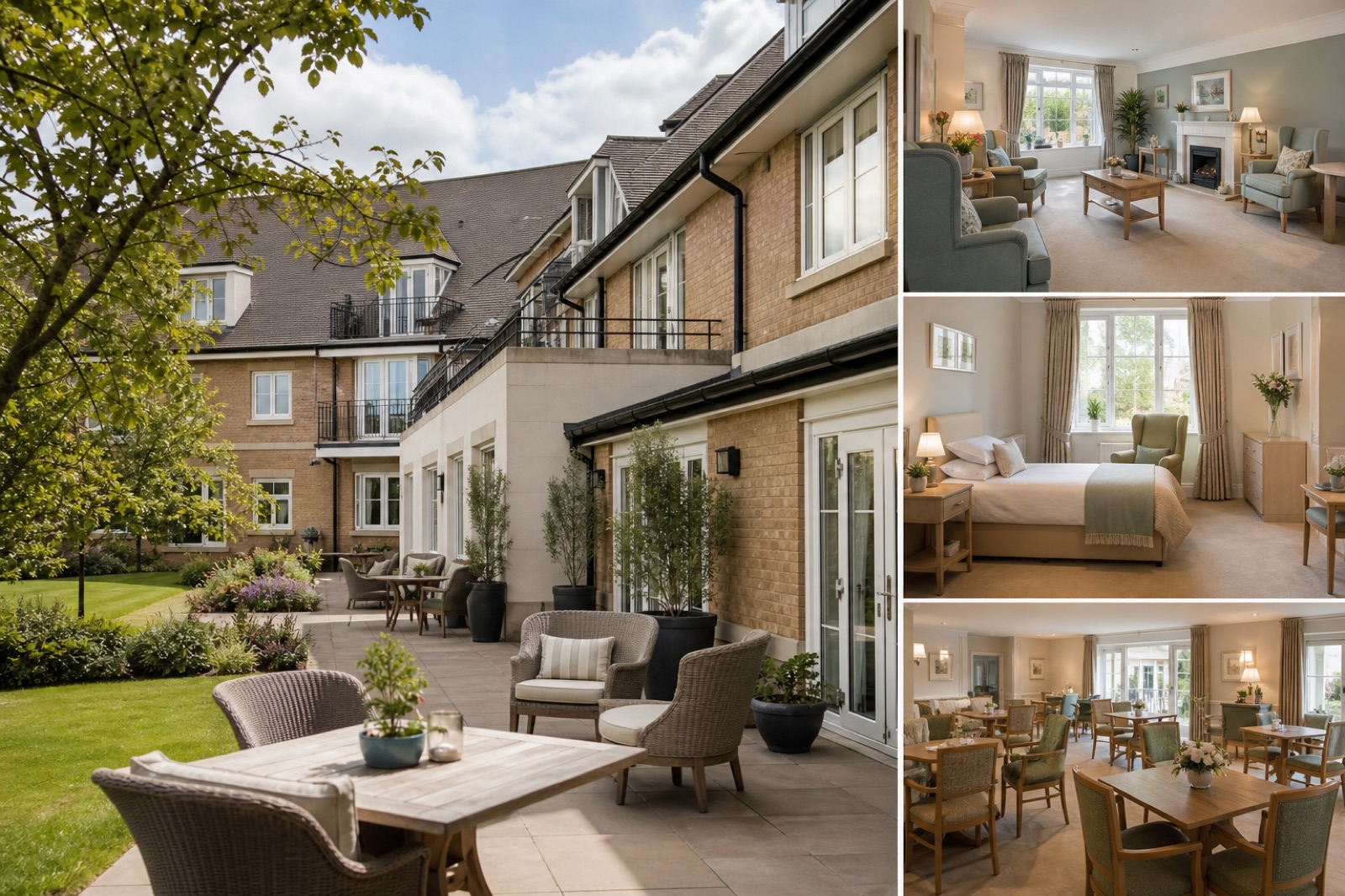
Learning disability care home finance
We arrange commercial finance for operators, buyers and investors in learning disability and mental health care. This is business lending against a trading service, not help with an individual's care costs.

Funding ld and mental health
Learning disability and mental health care covers registered services supporting adults with learning disabilities, autism and mental health needs, ranging from residential homes to small-group and single-occupancy services. Fee-per-bed is high, income is largely local-authority and NHS commissioned, and lot sizes are typically smaller than mainstream elderly care.
Learning disability care home finance, as we use it, is the commercial mortgage, going-concern or development loan used to buy, build or refinance a learning disability or mental health service as a trading business. The credit case rests on the operator covenant, the CQC rating, the commissioning relationships and the suitability of the property for the client group.
Lenders treat this as a specialist, commissioned-income niche. They look for an operator with a strong clinical and behavioural track record, durable placements and a CQC rating that supports continued commissioning, because the income is closely tied to commissioner confidence.
We present the commissioning and clinical story so specialist-aware lenders can underwrite it, and we run the whole market for the keenest fit.
What we fund
- Residential learning disability care homes
- Adult autism and complex needs services
- Mental health residential rehabilitation
- Small-group and single-occupancy supported settings
- Behaviour-that-challenges and complex needs units
- Step-down services from hospital placements
Indicative terms
- Commercial mortgage LTVUp to 70 to 75% of value
- Going-concern basisTo around 70% of going-concern value
- Term15 to 25 years
- Indicative rateFrom around 7.5 to 9%
- Lot sizeOften smaller, higher fee per bed
- Key testsCovenant, CQC rating, commissioned income, client-group fit
- IncomeLargely local-authority and NHS commissioned
Indicative only. Terms vary by lender, operator and home and are not an offer of finance.
How we fund learning disability and mental health care
We fund these services on maintainable trading earnings and the durability of their commissioned income. For an acquisition or refinance we build the EBITDARM, examine the local-authority and NHS commissioning relationships and the operator's behavioural and clinical track record, and arrange a commercial mortgage to around 70 to 75% of value over 15 to 25 years, or a going-concern facility to roughly 70% of going-concern value. Because lot sizes are often small and fee-per-bed high, lending is sized on trading as much as bricks and mortar. For new or reconfigured services we arrange development finance to about 60 to 70% of loan-to-cost. We present every figure as indicative, never an offer, and the terms depend on the service's accounts, rating and commissioning.
Lender appetite for learning disability and mental health care
This is a specialist field with committed appetite from the right lenders. Shawbrook and OakNorth fund learning disability and mental health operators through their healthcare teams, valuing the high fee-per-bed and commissioned income. Assetz Capital and Allica Bank support owner-operator acquisitions, while Puma Property Finance and Ortus feature on purpose-built and reconfigured services. Atom Bank and Paragon are more selective. As a broker without an exclusive tie, we match the client group, commissioning profile and CQC rating to the lenders genuinely comfortable with learning disability and mental health risk, rather than steering every case to one name.
The learning disability and mental health care market
This sits on the commissioned, resilient end of social care rather than the elderly-care fee tables, so we apply the elderly figures only as context. Knight Frank reports the wider healthcare sector EBITDARM margin at 30.1% of income for FY2024/25 and healthcare investment of £3.2bn in FY2024 against a five-year average of £2.4bn, with sector total returns of 5.8%, evidence of deep institutional interest in operationally robust healthcare assets. Skills for Care reports a social-care workforce vacancy rate of 7.0% for 2024/25, down from a 10.5% peak, easing a key delivery pressure. For lenders, a learning disability or mental health service with durable commissioned placements and a strong CQC rating is a defensible income asset, underwritten on its specialist trading.
Finance that suits this setting
- Care home purchase and investment financeAcquires a trading learning disability or mental health service or portfolio.
- Going-concern and operator financeLends on EBITDARM where a specialist operator takes on a commissioned service.
- Care home development financeFunds purpose-built or reconfigured learning disability and mental health schemes.
- Care home refinanceRe-prices debt or releases equity from a stabilised, well-commissioned service.
Fund a ld and mental health home
A view on fundability within one working day.
What drives a learning disability or mental health home's numbers
These services run on high fee-per-bed and largely local-authority and NHS commissioned income, so the economics turn on income durability and the operator's behavioural and clinical capability rather than mainstream occupancy alone. The wider sector context from Knight Frank is an EBITDARM margin of 30.1% of income and staff costs at 55.3% for FY2024/25, with specialist fee-per-bed typically above the £1,420 a week nursing benchmark. The decisive factors are the spread and durability of commissioned placements, the CQC rating that underpins continued commissioning, and the suitability of the property for the client group. Because lots are often small but earnings strong, lenders size lending on trading as much as bricks and mortar. We model EBITDARM and stress commissioner concentration.
Indicative learning disability and mental health leverage and rates
Indicatively we arrange commercial mortgages to around 70 to 75% of value, or going-concern lending to roughly 70% of going-concern value, over 15 to 25 years, with pricing from around 7.5 to 9% reflecting the specialist risk. Durable commissioned placements and a strong CQC rating earn the keener end; concentrated income or a weak rating pull terms back. Purpose-built or reconfigured development runs to about 60 to 70% of loan-to-cost. These are market-typical, indicative figures and never an offer; the terms a given service attracts depend on its accounts, rating and commissioning relationships, and we run the market to match the case to the right specialist lender.
Live care schemes in the planning pipeline
Recent care-related planning activity relevant to ld and mental health, drawn from local-authority records.
-
Smithfield Birmingham Masterplan, Bullring, Pershore Street, Birmingham B5 6PB
Hybrid planning application for the redevelopment of Smithfield Birmingham to provide a mixed-use scheme including residential, retail, F&B, leisure, hotel, office and public realm, by Lendlease Europe and Birmingham City Council
View on the planning portal → -
3 Centenary Square (Three Centenary Way / Paradise Phase 3), Broad Street, Birmingham B1 2DT
Detailed planning application for office building of approximately 280,000 sq ft Grade A office accommodation with retail / F&B at ground floor, Paradise Birmingham Phase 3, Argent and Birmingham City Council JV
View on the planning portal → -
Custard Factory, Gibb Street, Digbeth, Birmingham B9 4AA
Change of use and refurbishment of existing creative quarter buildings to provide flexible Class E commercial floorspace, studio space and F&B units
View on the planning portal → -
103 Colmore Row, Colmore Business District, Birmingham B3 3AG
Internal refurbishment and Cat A fit-out of floors 7 to 12, prime CBD office building, scheme led by Sterling Property Ventures
View on the planning portal → -
Beorma Quarter Phase 2, Digbeth High Street, Birmingham B5 4BU
Mixed-use scheme: 36-storey residential tower, 19-storey hotel, 10-storey office building and ground-floor retail / F&B, fronting the Curzon Investment Plan area
View on the planning portal → -
Tyseley Energy Park, Bordesley Park Road, Tyseley, Birmingham B11 2BU
Class B2 / B8 industrial expansion at Tyseley Energy Park to accommodate clean-energy occupier, including 18,000 sq ft new build warehouse
View on the planning portal →
Frequently asked questions
Can I get finance to buy a learning disability care home?
Yes. We arrange commercial mortgages and going-concern lending to buy trading learning disability and mental health services, typically to around 70 to 75% of value, over 15 to 25 years. Lenders weigh the operator's track record, the CQC rating and the commissioning relationships. We present the leverage as indicative, not an offer.
How does commissioned income affect the loan?
Durable local-authority and NHS commissioned placements add income visibility, which can strengthen the covenant case. Lenders assess how long placements have run and how concentrated the income is with any one commissioner. We present the full income picture so the risk is clear.
Why are learning disability services often smaller lots?
Many run a handful of beds at high fee-per-bed, so the property value can be modest even where trading earnings are strong. Lending is therefore sized on trading performance as much as the property itself, which suits specialist-aware lenders.
Is this finance for the operator or for paying care costs?
It is business funding for the operator, buyer or investor, used to buy, build or refinance the service as a trading business. It is not help with paying for an individual's care; that is a consumer matter we do not advise on.
Can finance fund a new learning disability or mental health scheme?
Yes. We arrange development finance to around 60 to 70% of loan-to-cost for purpose-built or reconfigured services, with a term exit once the service is registered, commissioned and trading.
Funding a ld and mental health home?
Tell us about the home and the operator and we will come back with a view on fundability and likely terms.